
Introduction To Hair Transplant
Hair plays a vital role in defining one’s appearance, personality, and confidence. However, hair loss has become an increasingly common concern today, affecting both men and women across different age groups. Factors such as genetics, stress, hormonal imbalances, lifestyle habits, and environmental conditions contribute significantly to hair thinning and baldness.
Hair transplant is a scientifically proven, safe, and long-term solution for restoring hair. With modern techniques and medical advancements, it is now possible to achieve natural density, improved hairline design, and long-lasting outcomes. The procedure not only enhances physical appearance but also helps in boosting self-esteem and overall confidence.
At Alive Wellness Clinics, we combine medical expertise with advanced techniques to deliver personalized and effective hair restoration solutions tailored to individual needs.
Scale Of Baldness
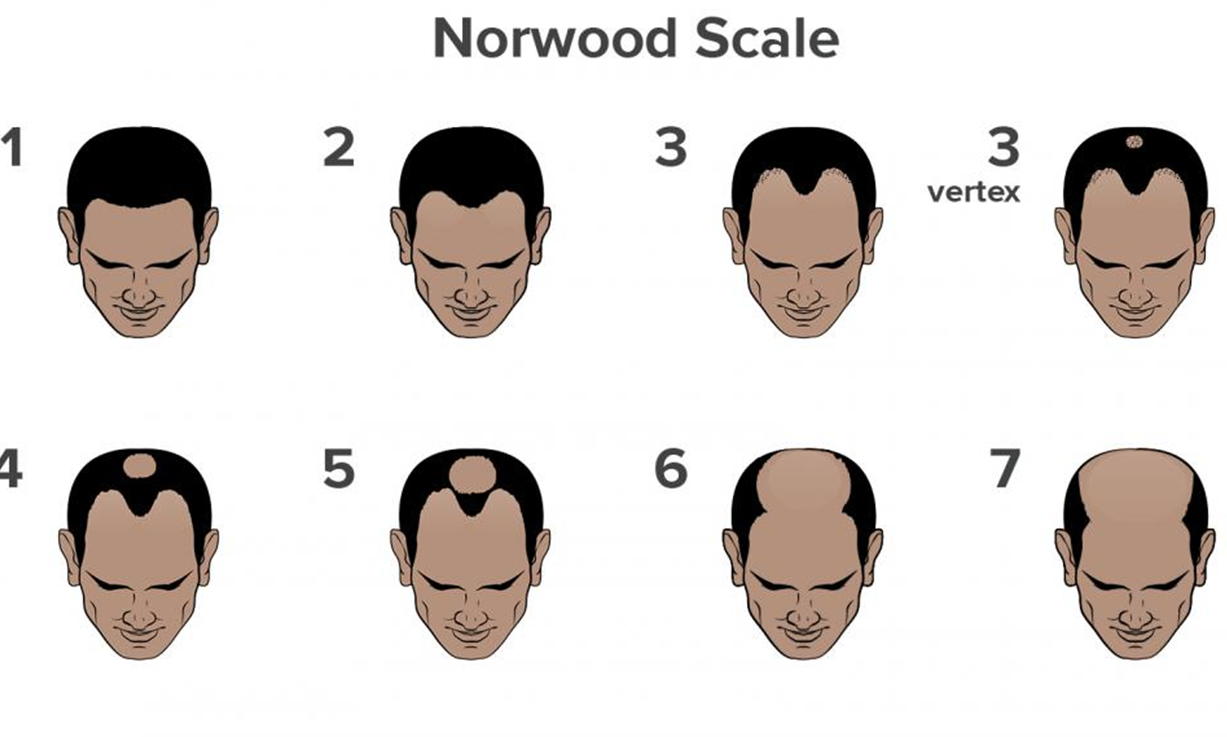
Note: In males, Ideally Norwood Scale 2 and above can be suggested for hair transplant.
Ludwig Scale - Female
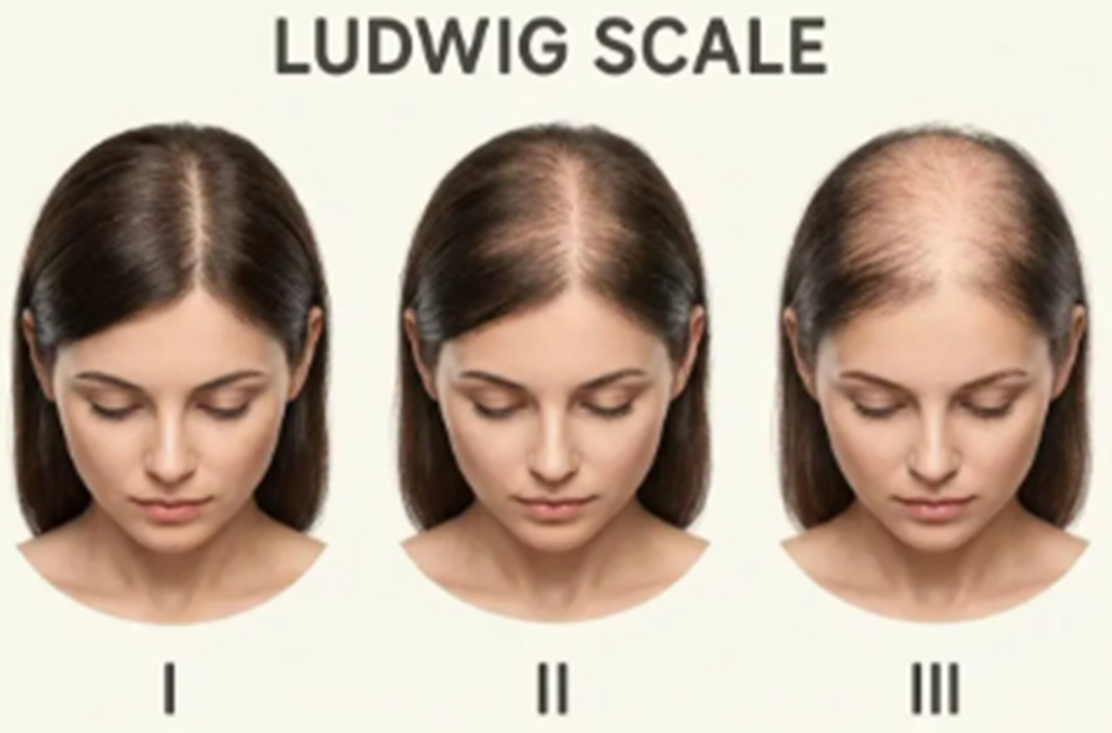
Note: In females, Ideally Norwood Scale 2 and above can be suggested for Hair Transplant.
What Is DHT And How Does It Affect Hair Loss?
DHT (Dihydrotestosterone) is a hormone derived from testosterone through the action of an enzyme called 5-alpha reductase. It plays a key role in pattern hair loss.
In individuals who are genetically sensitive, DHT attaches to hair follicles, hence blocks the flow of nutrition and gradually causes them to shrink—a process known as miniaturization. Over time, this leads to thinner, weaker hair and eventually stops new hair growth in affected areas.
What Is Alopecia?
Alopecia is the medical term for hair loss from the scalp or body. It can be temporary or permanent and may occur due to genetics, hormones, medical conditions, stress, or lifestyle factors.
Types of Alopecia
1. Androgenetic Alopecia (Pattern Baldness)
Most common type (men & women).
Caused by genetic sensitivity to DHT.
Cure/Management: Medications, PRP therapy, and hair transplant in Delhi for permanent restoration.
2. Alopecia Areata
Sudden patchy hair loss due to an autoimmune reaction.
Cure/Management: Steroids, immunotherapy; hair may regrow naturally.
3. Telogen Effluvium
Diffuse hair shedding due to stress, illness, or deficiency.
Cure/Management: Treat the underlying cause (nutrition, stress); usually reversible.
4. Traction Alopecia
Caused by tight hairstyles or constant pulling.
Cure/Management: Stop traction early; transplant if permanent damage occurs.
5. Scarring Alopecia
Permanent destruction of hair follicles due to inflammation or injury
Cure/Management: Control disease medically; transplant possible in stable cases
What Is Hair Transplant?
Hair transplant is a minimally invasive surgical procedure that involves transferring healthy hair follicles from one part of the body (commonly referred to as the “donor area,” usually the back or sides of the scalp) to areas experiencing thinning or baldness (the “recipient area”). The transplanted hair follicles are typically resistant to hair loss, which ensures that the results are long-term. Once transplanted, these follicles continue to grow just like normal hair.
There are 3 primary techniques used in hair transplant procedures:
1. FUT (Follicular Unit Transplantation)
A strip of skin from the scalp is removed from the donor area, and hair follicles are then separated and transplanted. The FUT procedure leaves a permanent scar in the donor area and has a long recovery time.
The implantation process involves making slits on the scalp for implanting grafts. Medical tools such as Doctor forceps and tweezers are used to place the grafts in the slits. These tools have minimal control on angle, depth, and direction of the grafts, often resulting in unnatural and low density result.
2. FUE (Follicular Unit Extraction)
In this technique, a motorized extractor is used for the extraction of grafts from the donor area. However, the implantation process remains the same as in FUT. The implantation process involves making slits on the scalp for implanting grafts. Medical tools such as the doctor's forceps and tweezers are used to place the grafts in the slits. These tools have minimal control over the angle, depth, and direction of the grafts, often resulting in unnatural and low-density results.
3. Microtouch Hair Transplant:
Step 1 - Extraction
Grafts are extracted from the donor area using motorized extractor and a precise, high-quality punch that ensures no scar, faster recovery, and optimum use of the donor area grafts.
Step 2 - Grafts Preservation
Grafts are preserved under controlled parameters of temperature, hydration and 'out of body time’ to maximize the ‘graft survival rate.' Grafts are arranged on the basis of the number of hairs, which enables the surgeon to optimally plan the implantation for a natural result
Step 3 - Implantation
Performed using Choi Pen implanter, which enables the surgeon to have complete control over angle, depth and direction results in natural looking hairs result
Important Note: Microtouch Hair Transplant is performed only by the best hair transplant surgeon in Delhi with single-use, precise, and high-quality surgical tools.
Why Choose Alive Wellness Clinics For Microtouch Hair Transplant?
1. Best-in-Class Operation Theatre (OT) in Alive Wellness
The procedure is conducted in a state-of-the-art OT equipped with the latest, high-quality medical technology, ensuring precision, hygiene, and optimal outcomes.
2. Performed by Trained Surgeons
Microtouch Hair Transplant in Delhi is exclusively performed by a highly trained and experienced hair transplant surgeon using single-use, precise, and high-quality surgical tools.
3. Natural-Looking Results
The use of the Choi Pen in the Microtouch technique enables complete control over the angle and direction, which ensures seamless merging of transplanted hair with existing hair, delivering results that appear completely natural.
4. High Graft Survival
Advanced graft handling techniques and preservation methods ensure higher graft survival rates and overall excellent results.
5. Minimal Recovery Time
Designed for modern lifestyles, the procedure involves minimal downtime, allowing individuals to resume their routine quickly.
6. No Visible Scarring
With the use of ultra-fine microsurgical instruments, extraction and implantation are performed with extreme precision, resulting in virtually no visible scarring.
7. High Safety Standards
The entire procedure follows strict clinical sterilization protocols and safety guidelines, ensuring maximum patient safety and care at every step.